BARCELONA WORLD CAPITAL OF ARCHITECTURE 2026
Barcelona is a city of architecture, renowned for the beauty and uniqueness of its buildings and for its ability to combine heritage and innovation. In this context, concrete has become a key material in shaping its contemporary architecture, providing technical, expressive, and sustainable solutions.
From public facilities to infrastructures and urban projects, concrete is part of the city’s architectural language and helps create functional, durable spaces that are integrated into their surroundings. This collection presents a selection of architectural works in Barcelona that make use of this material, along with a brief explanation of each project and the role it plays within them.
Colón Tower (Drassanes – Raval)
Authors: Josep Anglada Rosselló, Daniel Gelabert i Fontova, José Ribas i González and Emili Bordoy Alcántara.
Concrete as structural “muscle”: the load-bearing structure is reinforced concrete, with a grid of columns and a central core; the base combines glass with textured concrete panels that “dress” the tower.
Image: Michelangelo-36, 2007 (Wikipedia)
Atalaya Tower (Diagonal / Sarrià – Les Corts)
Authors: Frederic Correa + Alfons Milà (Correa–Milà).
Concrete as system: reinforced concrete structure with flat slabs without beams, and curtain wall enclosures using prefabricated elements and artificial stone (a very “industrial-elegant” aesthetic of the time).
FAD Award (1971)
Image: Enric, 2017 (Wikipedia)
Guineueta Market (Nou Barris)
Authors (original project): Josep Anglada, Daniel Gelabert and Josep Ribas (AGR). Later renovation: Daniel Mòdol (according to local catalogue).
Concrete as language: structure and material expression where concrete (and its joints/reliefs) constructs the building’s image. The enclosure with circular honeycomb-like “oculi” (repeated modules/pieces) transforms a humble typology into a monumental object.
FAD Awards finalist 1965
Image: Daniel Mòdol Deltell, 2010 (Wikipedia)
Joan Miró Foundation (Montjuïc)
Author: Josep Lluís Sert.
Concrete as “Mediterranean béton brut”: exposed concrete is used, treated to appear white; even the imprint of the formwork is valued (texture as part of the project). Sequence of spaces, courtyards and skylights: brutalism without aggressiveness, rather luminous and tactile.
Image: Robertgombos, 2018 (Wikipedia)
COAC Headquarters (Ciutat Vella)
Author: Xavier Busquets i Sindreu (competition-winning project).
Concrete in the interior: the reinforced concrete frieze supports sgraffito works linked to Picasso: structure + art. Technological modernity inserted in front of the cathedral: the contrast (glass/stone/concrete) is part of the urban manifesto.
Image: Enric, 2021 (Wikipedia)
Walden 7 (Sant Just Desvern)
Author: Ricardo Bofill Taller de Arquitectura (RBTA), 1975.
Concrete as megastructure: logic of aggregated modules (vertical city) where the heavy material allows stacking, hollowing and stitching interior courtyards; concrete makes the habitable labyrinth possible. Widely documented and recognized as a key piece of late modernity.
Image: Jordi Ferrer (Wikipedia)
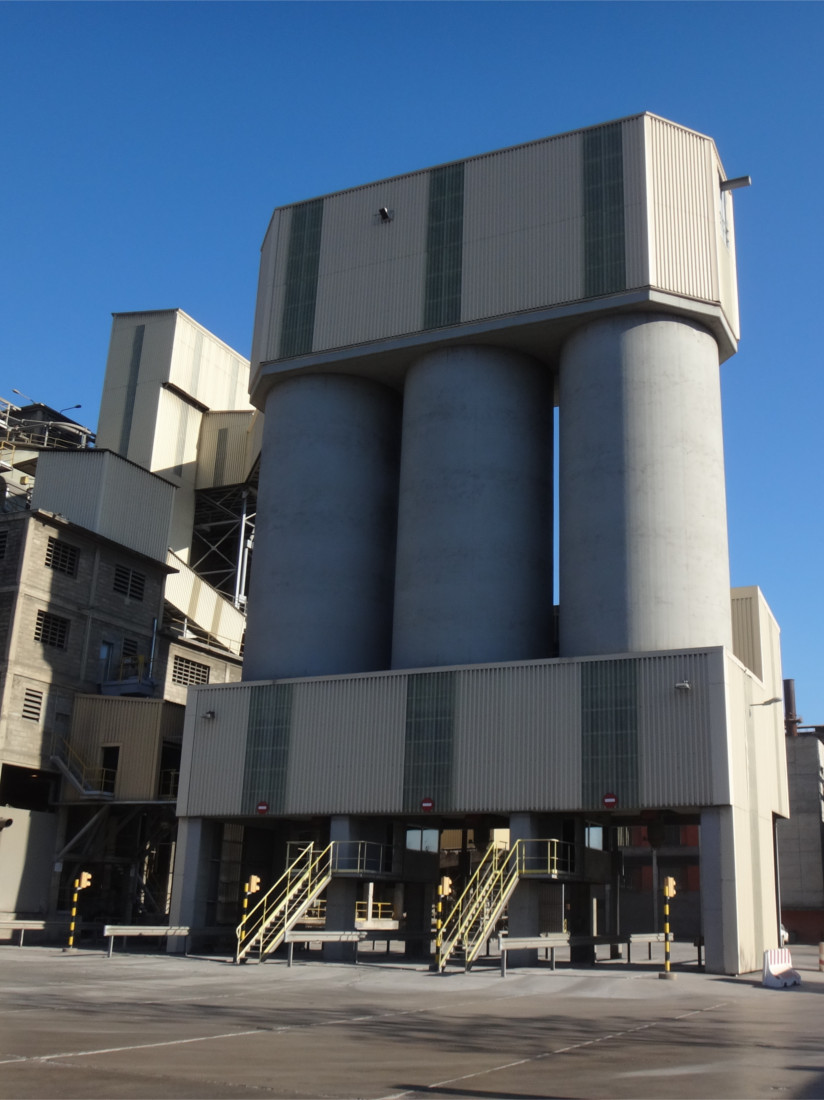
La Fàbrica (Sant Just Desvern)
Author (conversion): RBTA; intervention on a former cement factory (1973).
Concrete as industrial archaeology: silos, galleries and industrial elements reinterpreted; the project shows how concrete can be domesticated with light, voids and vegetation.
City of Barcelona Architecture Prize (1980)
Image: Till F. Teenck, 2007 (Wikipedia)
Three Chimneys (Sant Adrià de Besòs)
Author: industrial infrastructure with no known author
Concrete as metropolitan icon: the chimneys are made of concrete, and their scale turns the material into landscape. Built in the 1970s, operational until 2011; currently undergoing redevelopment (Catalunya Media City and new urban waterfront).
Image: Kent Wang, 2024 (Wikipedia)
AUDIOVISUAL DOCUMENTATION
The actions of the sector, in images and videos
Here you will find a selection of graphic resources and visuals related to the activity of Ciment Català which you can download in high resolution for publication. We would be grateful if you could cite the origin when you use them.
INFORMATIVE VIDEOS
INSTITUTIONAL ACTIVITIES
WORK GROUPS
EVENTS
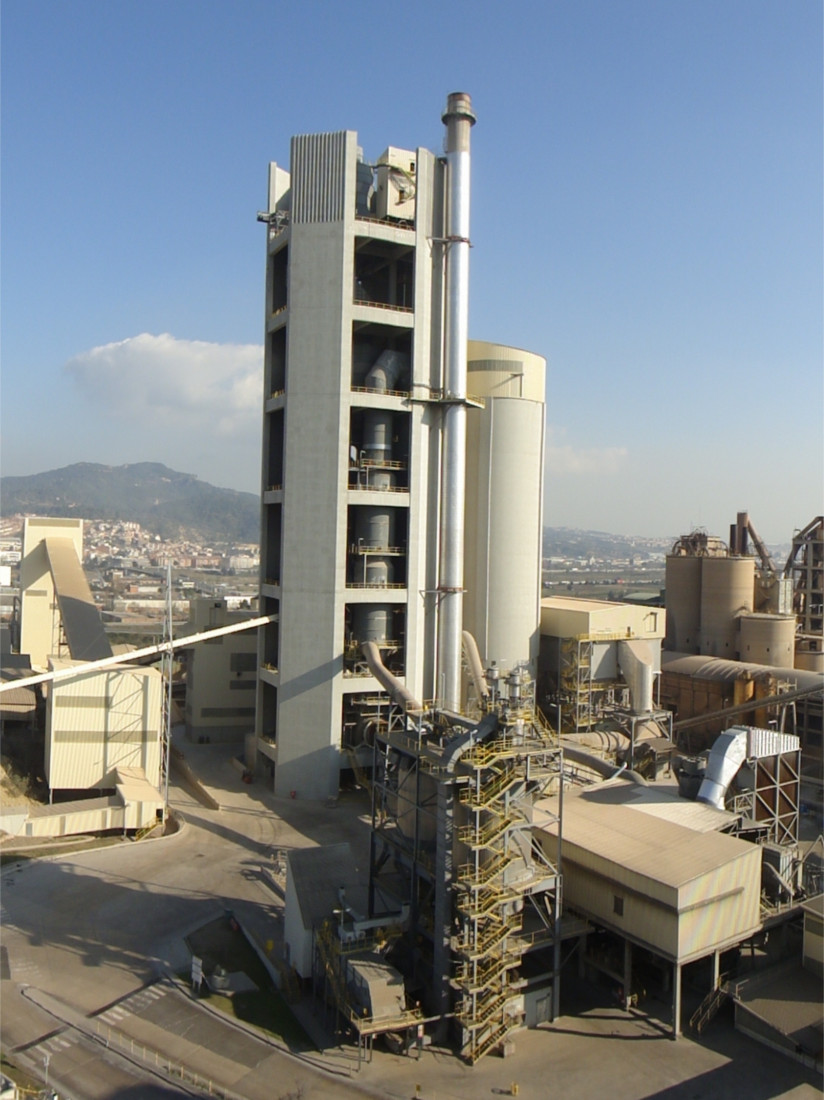
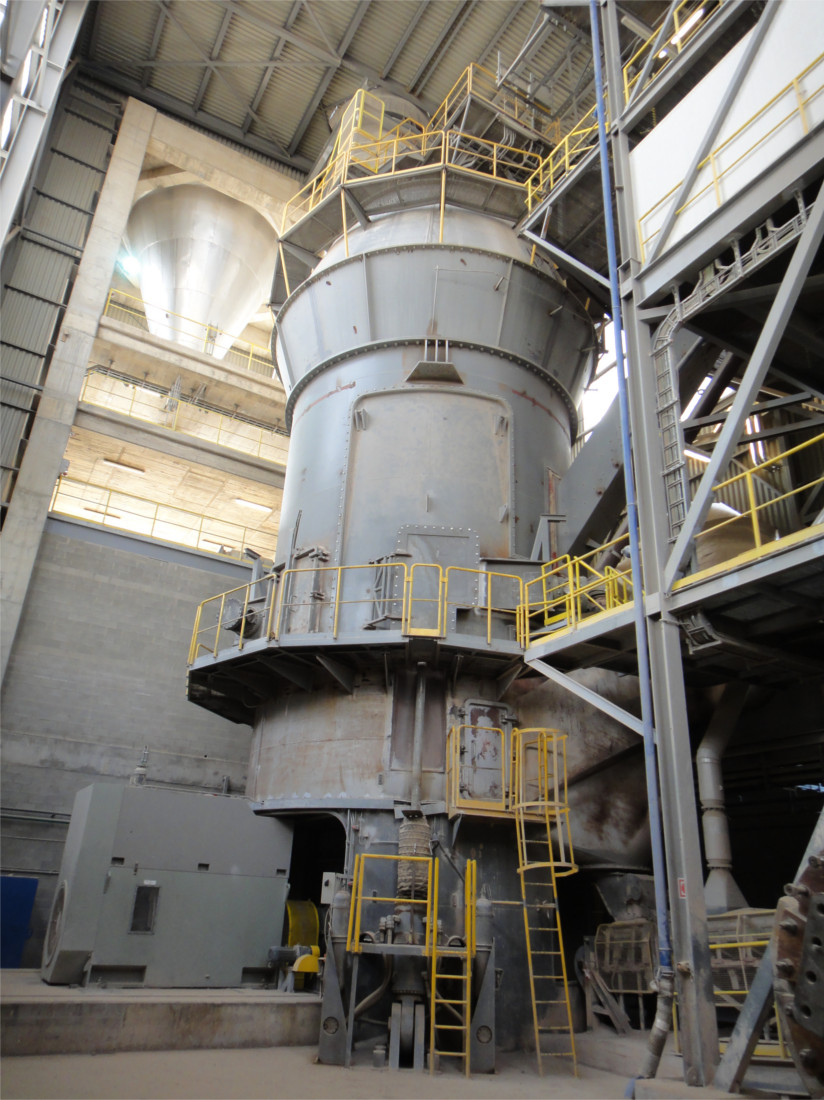
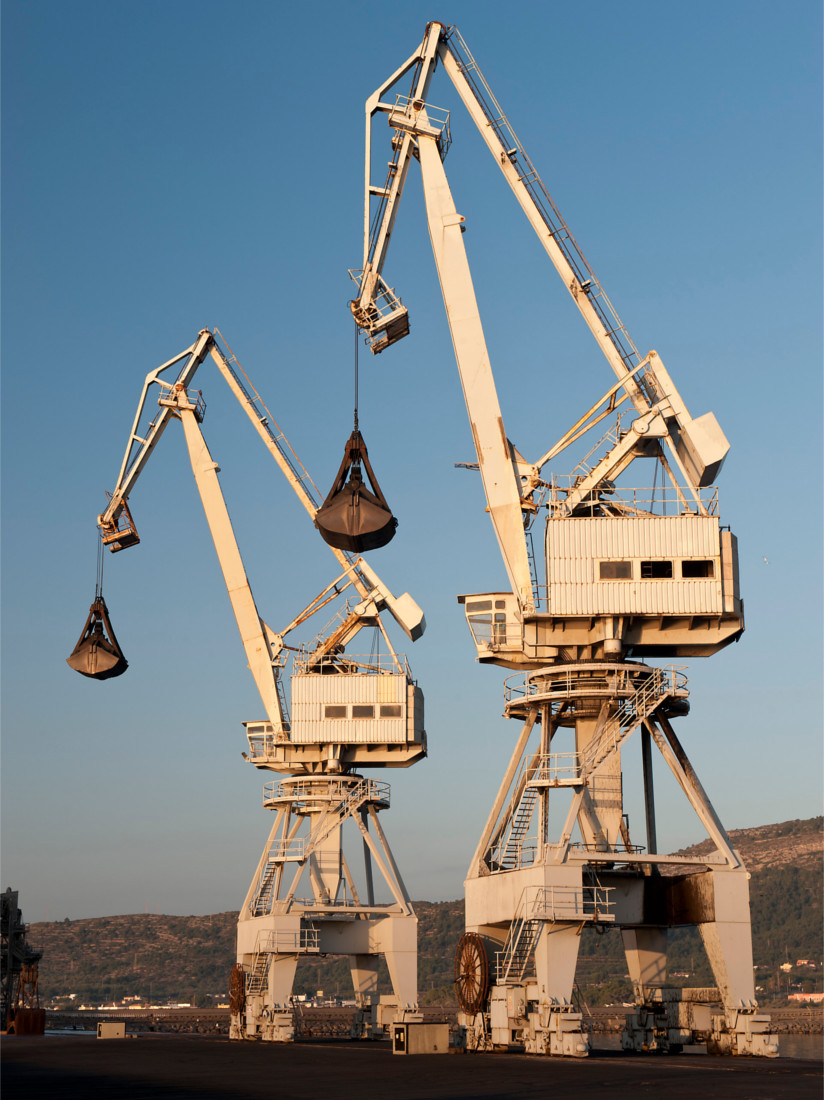
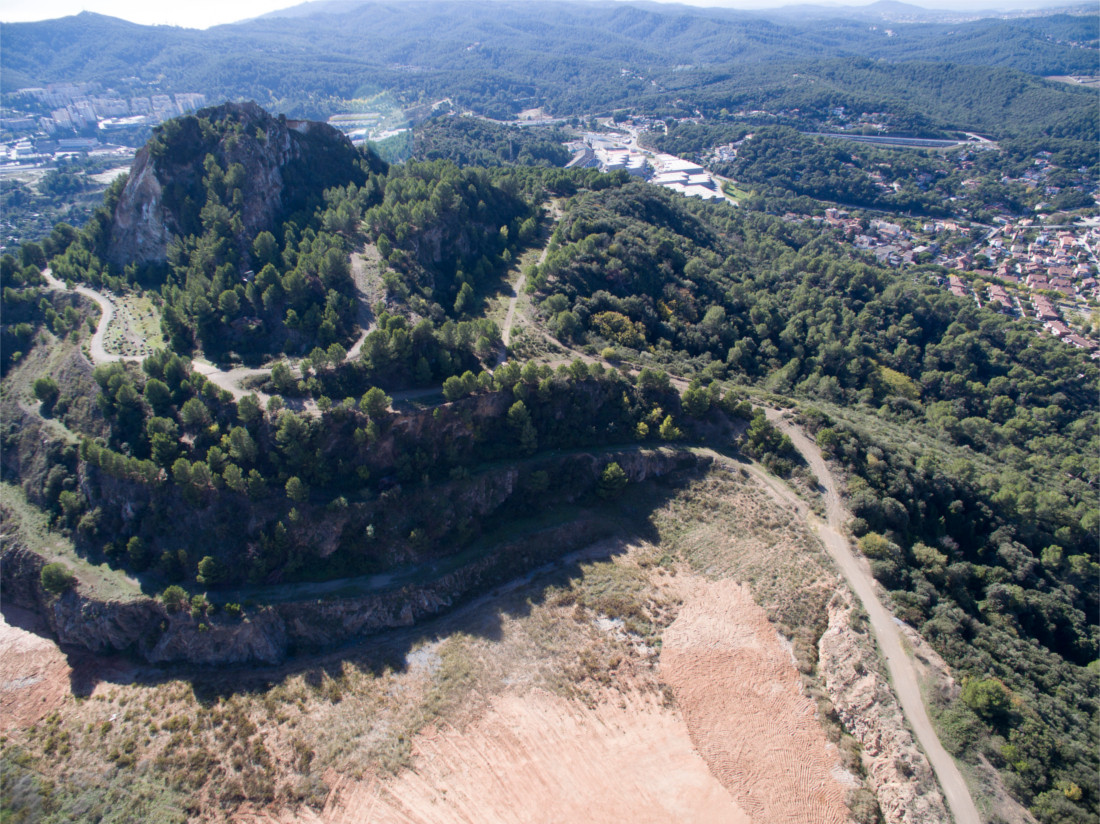
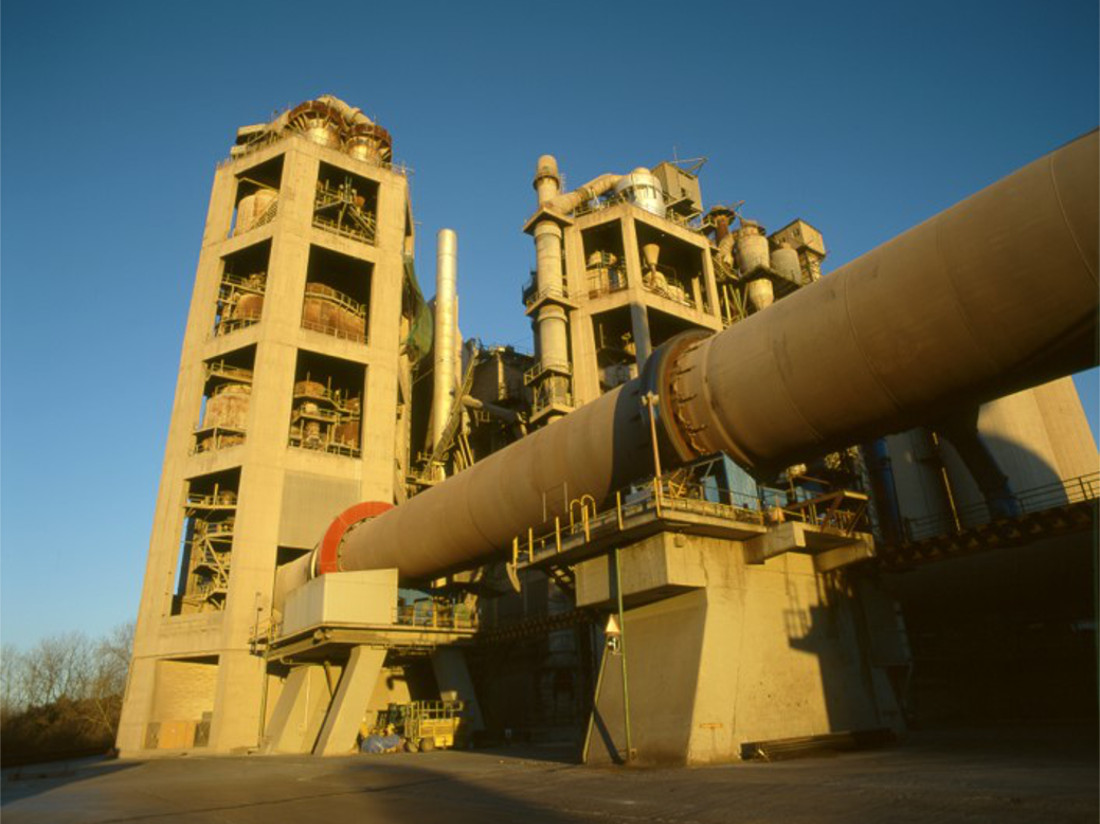
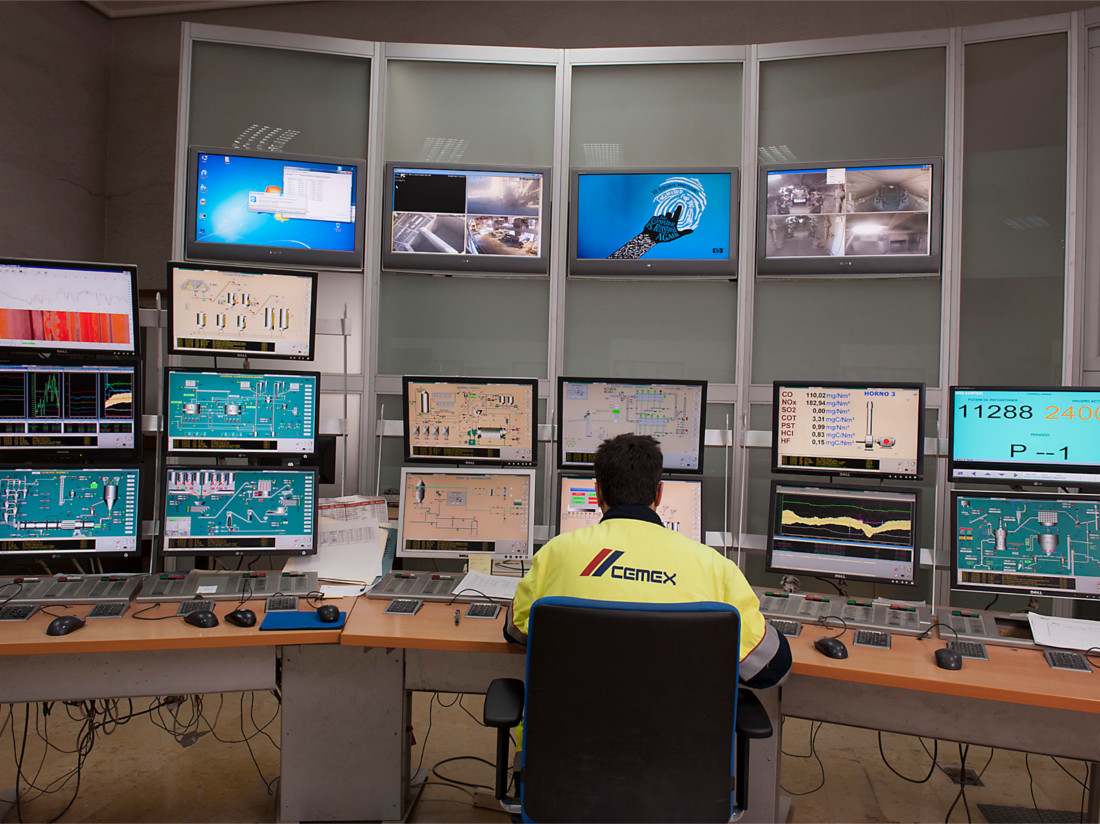
INDUSTRIAL FACILITIES